

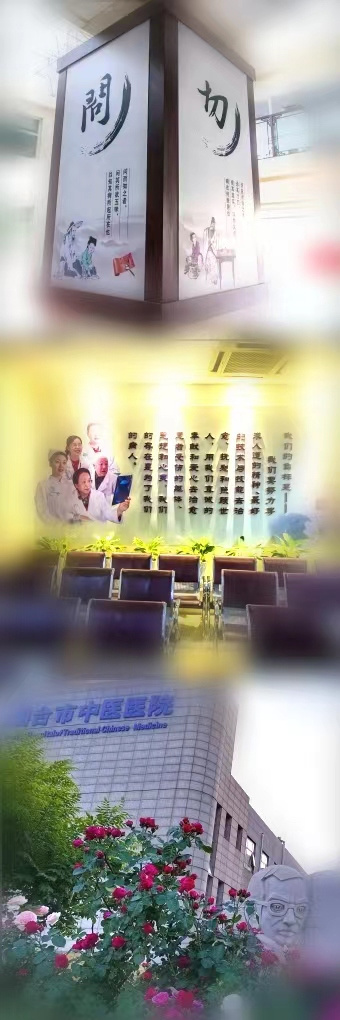
Xinglin Has Expertise in Oncology | Ten Years of Anti-Cancer Journey: Integrating Traditional Chinese and Western Medicine for Diagnosis and Treatment Helps Metastatic Squamous Cell Carcinoma Patients Rekindle the Light of Life
The gentle sunlight, softly filtering through the window of the Oncology Department One of Yantai Hospital of Traditional Chinese Medicine, bathed the entire room in brightness and warmth. Ms. Li (a pseudonym), 51 years old, smiled as her fingers danced lightly over the screen of her mobile phone, sharing the beautiful photos she took during her recent trip with her attending doctor. In the photos, amidst the green mountains and clear waters, she appeared energetic and radiant. Who could have imagined that this cheerful lady had been engaged in a ten-year arduous battle against the "invisible killer" - primary-unknown metastatic squamous cell carcinoma.

The story goes back to 2014. Ms. Li accidentally felt a lump in her neck. A wave of anxiety immediately swept over her. She rushed to the hospital for treatment and underwent surgery to remove the tumor. However, the pathological results were like a heavy blow, plunging her into the abyss of despair - a malignant tumor. At that moment, she was disheartened and completely at a loss in the face of the unknown disease. Fortunately, the company of her family and their encouragement reignited her courage to fight against cancer. She firmly believed that as long as she treated the tumor seriously, there was still hope for a better prognosis.
The reality is far more cruel than we could have imagined. Multiple examinations, punctures, surgeries - the doctors were still unable to determine the primary site of the tumor. The lesion was like an enemy hidden in the dark, with a complex and difficult condition. Traditional treatment plans had little effect. Ms. Li felt as if she were lost in a fog, having only the determination to fight against the disease, but unable to find the target to attack. "When you face the tumor with confidence, you realize that you don't know what you are up against. The unknown is the greatest fear." After experiencing ineffective chemotherapy in another hospital, Ms. Li and her family were almost on the verge of giving up.
Just when they were at their lowest point of despair, after much investigation, they learned that the Oncology Department of Yantai Traditional Chinese Medicine Hospital is a national-level key specialty, which gave them new hope. Under the leadership of Director Tan Song, the oncology team of the first department tailored a combined Chinese and Western medical treatment plan for Ms. Li, which included "Western medical treatment combined with full-time Chinese medical escort". The team acted quickly and actively organized multidisciplinary consultations. They meticulously analyzed the imaging, pathological data, and experiences from other hospitals to uncover the nature of the tumor. At the same time, they reviewed the latest diagnostic and treatment guidelines from both domestic and international sources, not missing any clue.
In terms of traditional Chinese medicine treatment, the theory of "strengthening the body's defenses and stabilizing the foundation" serves as the guiding principle. Based on Ms. Li's different physical conditions and illness status at different stages, individualized Chinese herbal decoctions were carefully prescribed. During chemotherapy, the prescriptions focused on invigorating qi and strengthening the body, nourishing blood and generating marrow, helping her alleviate chemotherapy side effects such as bone marrow suppression; when her condition was stable, the prescriptions emphasized dispersing lumps and detoxifying, as well as strengthening the body to suppress the tumor, aiming to prevent tumor recurrence at its root. Additionally, traditional Chinese medical treatments such as acupuncture and moxibustion were skillfully employed. Acupuncture effectively relieved nausea, vomiting, and pain caused by chemotherapy; moxibustion, by warming up the yang qi, improved her deficient and cold constitution.

Ten years have passed slowly on the journey of fighting cancer. During this period, the tumor recurred multiple times, but with the combined treatment of traditional Chinese and Western medicine, each time it was able to overcome the danger and turn the situation around. "I really couldn't have imagined that ten years later, I would be in this state now," Ms. Li said with a sigh. Her words were filled with gratitude for life and appreciation for the hospital.
"Treating cancer is not a simple black-and-white confrontation, but rather a pursuit of a dynamic balance of life." Director Tan explained, "The precise diagnosis and treatment of Western medicine is like a sharp sword, capable of breaking through the stubborn defenses of tumors; while traditional Chinese medicine is like a sturdy shield, restoring the body's immune barrier, restoring the internal environment to a stable state, and depriving cancer cells of a breeding ground."
For a long time, the Oncology Department of Yantai Traditional Chinese Medicine Hospital has always adhered to the concept of "people-oriented, treating both symptoms and root causes". It integrates modern medical technologies with the thousand-year wisdom of traditional Chinese medicine. Through multidisciplinary collaboration and a full-cycle management model, it formulates personalized treatment plans for each patient. It not only aims to extend the patients' lifespan but also focuses on improving their quality of life. As Ms. Li said during the follow-up visit: "The doctors here not only cured my illness, but also taught me to embrace life with an optimistic attitude."
Tumor prevention and treatment is never a solo effort by an individual. The Oncology Department One of Yantai Traditional Chinese Medicine Hospital, with its unique model featuring multidisciplinary collaboration, full-cycle management, and the deep integration of traditional and modern medicine, has illuminated the hope lamps for countless patients in the battle for life, conveying warmth and strength, and safeguarding the dignity and brilliance of every life.

Telephone: 086-535-6597085
Emergency Telephone: 086-535-6597120
Address of the General Hospital: No.39, Happiness Road, Yantai City, Shandong Province
Bus route: take No. 2, No. 16, No. 26, No. 37, No. 42, No. 48, No. 70, No. 80, No. 82 direct

WeChat Public
©COPYRIGHT Yantai Traditional Chinese Medicine Hospital

SAF Coolest v1.2 设置面板 RGASS-AHOF-UAAFE-ZFA
无数据提示
Sorry, the current column has no content for the time being.!
You can view other columns or returnHome Page