

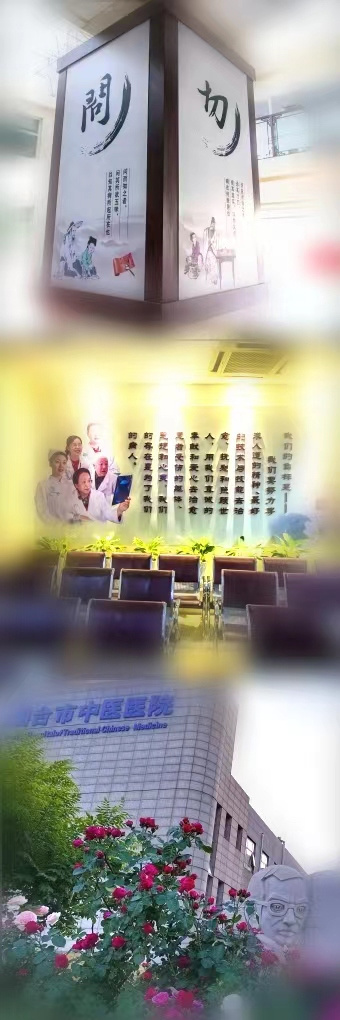
Traditional Chinese Medicine Specialization · Specialized Leadership ⑤ | Oncology Department 3: Ensuring Quality of Life throughout the Treatment Process
Editor's Note
In recent years, Yantai Hospital of Traditional Chinese Medicine has taken "reputation and trust among the people" as its belief and pursuit, adhering to the development strategy of "excellence in traditional Chinese medicine, strength in Western medicine, and integration of traditional and Western medicine". It has built a number of national, provincial and municipal key specialties with superb skills, excellent services and significant influence, becoming a benchmark and engine for the high-quality development of Yantai's traditional Chinese medicine industry. To facilitate citizens to fully understand the characteristics and strength of the municipal-level and above key specialties of the hospital, our hospital has specially launched the "National Medicine Specialization · Specialty Leadership" series of reports, presenting the unique charm and strength of the specialties in an all-round way, and better safeguarding the health and well-being of citizens.
With the continuous development of modern oncology, the tumor diagnosis and treatment model has been constantly innovated, completely breaking away from the limitations of the traditional single radiotherapy and chemotherapy, and gradually forming a comprehensive diagnosis and treatment system that is individualized, precise, and comprehensive. The Tumor III Department of Yantai Traditional Chinese Medicine Hospital has always adhered to the diagnosis and treatment concept of "equal emphasis on traditional Chinese and Western medicine, reducing toxicity and enhancing efficacy, and putting people first". It has deeply cultivated advantageous diseases such as gastric cancer, lung cancer, and breast cancer, integrating the essence of traditional Chinese medicine with modern tumor diagnosis and treatment technologies. It has overcome various advanced and refractory tumor diseases, using real clinical efficacy to build a survival hope for tumor patients and significantly improving their survival period and quality of life.

One-on-one personalized treatment precisely addresses the challenges of difficult tumors.
Advanced tumor metastasis, old age and frailty, inability to tolerate radiotherapy and chemotherapy, and significant side effects of some treatments are the major treatment challenges faced by many cancer patients nowadays. For patients of different ages, physical conditions, and disease stages, the Tumor Department Three has abandoned the homogenized and stereotyped treatment mode and adhered to personalized treatment strategies, forming multiple mature individualized treatment plans. "We focus on deepening the characteristic diagnosis and treatment of gastric cancer, and for difficult cases such as advanced gastric cancer with liver metastasis and postoperative complications, we have explored a comprehensive treatment path of 'pre-treatment + surgery + post-treatment traditional Chinese medicine maintenance'." Tumor Department Three Director Shao Hongmin introduced. Once there was an 80-year-old patient with advanced gastric cancer who, at the initial diagnosis, had liver metastasis, severe anemia, with a hemoglobin level of only 65g/L, accompanied by large areas of gastric ulcers. The initial hospital judged that there was no treatment value and recommended conservative rest. The patient's family did not want to give up and came to our hospital for treatment. The team of the Tumor Department Three comprehensively evaluated the patient's characteristics of old age, frailty, and critical condition, abandoned the aggressive radical chemotherapy plan, adopted small-dose chemotherapy combined with immunotherapy, and also combined with characteristic traditional Chinese medicine for syndrome differentiation and adjustment. During the treatment process, the department adjusted the traditional Chinese medicine plan according to the patient's condition dynamically. In the early stage, it was mainly for nourishing blood, protecting the gastric mucosa, soothing the liver and stomach, to improve symptoms such as anemia, abdominal distension, and indigestion; when the patient's physical condition gradually recovered, it added dispersing nodules and resolving stasis medicinal materials, and at the same time combined with the hospital-prepared Huayu Zhitong Powder for external application, to specifically solve the problems of tumor stasis and physical pain. Through systematic treatment, the patient's gastric ulcer was completely healed, the liver metastasis lesion was completely disappeared, achieving a clinical tumor-free state, the anemia symptoms were completely corrected, and now the patient's physical condition has significantly recovered, and can live a normal life and engage in outdoor activities with the support of family members, completely breaking the survival predicament of advanced elderly patients with gastric cancer. For common tumors such as lung cancer and breast cancer, the department also implements individualized diagnosis and treatment thinking. A patient with lung cancer brain metastasis who had been diagnosed for 9 years, with poor conventional targeted and chemotherapy treatment effects, and also had severe headaches, repeated epileptic seizures, and kidney function damage, etc. After visiting our hospital, the team of the Tumor Department Three gradually optimized the Western medicine treatment plan, slowed down the administration cycle of targeted drugs, and at the same time used the Chinese medicine formula for strengthening the spleen, tonifying the kidney, and consolidating the foundation to effectively improve the side effects of targeted treatment such as proteinuria, diarrhea, and hypertension, and avoid high-risk complications such as immune pneumonia. Now the patient's condition is long-term stable, fully self-care, and far exceeds the survival expectations of similar advanced lung cancer patients.

The unique features of traditional Chinese medicine - reducing toxicity and enhancing efficacy - lay the foundation for a green medical treatment system.
Compared to single Western medical treatment, the core advantage of combining traditional Chinese and Western medicine in diagnosis and treatment lies in effectively reducing treatment side effects, consolidating treatment outcomes, and lowering the risk of recurrence and metastasis. Director Shao Hongmin said, "During chemotherapy and radiotherapy, targeted therapy, and immunotherapy, while killing tumor cells, they also damage the normal functions of human organs and systems, leading to problems such as bone marrow suppression, nausea and vomiting, cancer pain, pleural and abdominal effusion, and weakened immunity. However, traditional Chinese medicine can precisely fill this gap."
After over three decades of clinical practice, the Tumor Department has developed several self-developed hospital-specific preparations and classic prescriptions, forming a comprehensive and three-dimensional traditional Chinese medicine treatment system that includes oral administration of traditional Chinese medicine, external application of ointments, intravenous infusion of preparations, and acupuncture and moxibustion as auxiliary treatments. This system precisely meets the treatment needs at all stages of tumors.
Among them, Fuzheng Shengxue Granules is the core characteristic preparation of the department, specializing in bone marrow suppression caused by chemotherapy and radiotherapy. Through the core effects of tonifying the kidney, filling essence, nourishing blood, and strengthening qi, it rapidly improves the white blood cells, platelets, and hemoglobin indicators of patients, alleviating anemia, physical weakness, and other symptoms, and laying a solid physical foundation for patients to complete chemotherapy and targeted therapy continuously. Kangpul Sanjie Tang is an exclusive prescription for lung cancer, closely following the core pathogenesis of "deficiency of vital energy and accumulation of phlegm and stasis", and can be adjusted according to different symptoms such as coughing, spleen deficiency, and dampness in the body, effectively controlling the progression of lung lesions, relieving respiratory tract discomfort, and delaying the occurrence of drug resistance. Zanbei Sanjie Capsules, Huayu Zhitong Powder, and other characteristic preparations focus on resolving stasis and toxicity in tumors, precisely disperse nodules and eliminate tumors, activate blood circulation, and relieve pain, quickly alleviating stubborn symptoms such as cancer pain, pleural and abdominal effusion, and physical congestion, and have no side effects of Western pain-relieving drugs, making them safer.
At the same time, the department routinely uses traditional Chinese medicine preparations such as Huatianzi and Bozhi Sugar Peptide for intravenous infusion intervention, effectively preventing tumor recurrence and metastasis after surgery.
"For advanced tumor patients who are elderly, weak, have underlying diseases, or cannot tolerate chemotherapy and radiotherapy, we regularly carry out pure traditional Chinese anti-tumor treatment, adhering to the concept of 'surviving with tumors and prioritizing tonifying'. Through personalized oral decoctions, external application of traditional Chinese medicine, intravenous infusion of traditional Chinese medicine, and acupuncture and moxibustion, we help patients stabilize the lesion, improve their physical condition, and prolong their survival period," said Director Shao Hongmin. In clinical practice, a high-aged lung cancer patient whose family refused to undergo biopsy and Western anti-tumor treatment, the department used a pure traditional Chinese treatment plan for continuous intervention for 7 years, and the patient's lesion was stable and he was able to take care of himself.
In addition, for patients with stage 2 and 3B gastric cancer after surgery, the Tumor Department has long used pure traditional Chinese therapy for long-term intervention, specifically repairing postoperative damage to the spleen and stomach, regulating the functions of internal organs, and blocking the causes of tumor recurrence, helping many patients achieve clinical cure and significantly improving the five-year survival rate; for long-term complications after tumor surgery, the department has developed exclusive conditioning plans to effectively solve problems such as bile duct stones, suppurative cholangitis, and repeated digestive disorders after gastric surgery, providing comprehensive support for the postoperative recovery of patients.

Humanistic Comfort Medical Care - Enhancing the Patient's Medical Experience
While focusing on the improvement of diagnostic and therapeutic techniques, the Tumor Department Three has always adhered to the service concept of "treating the disease and also treating the person, treating the tumor and also treating the heart". Relying on traditional Chinese medicine therapies, it has created a painless and non-vomiting standardized and comfortable treatment ward, systematically addressing various complications and treatment side effects of tumors. For common emergencies and complications of tumors such as cancer pain, stubborn nausea and vomiting, malignant pleural and abdominal effusion, pericardial effusion, insomnia and anxiety, and limb numbness, the department has abandoned the single Western medicine symptomatic treatment model and intervened in preventive intervention by traditional Chinese medicine, dynamic adjustment throughout the process, and subsequent consolidation and rehabilitation. It quickly alleviates patients' various discomforts, reducing the probability of symptom recurrence from the root, and making tumor treatment free from pain and achieving green recovery.
"We have always balanced the therapeutic effect and the warmth of life, fully considering the medical needs of patients in the grassroots and those in difficult situations, flexibly optimizing the treatment plan, and reducing the economic pressure on patients," said Shao Hongmin. A middle-aged and elderly patient diagnosed with breast cancer in 2013, after multiple chemotherapy and endocrine treatments, developed multiple bone metastases, a large amount of pleural and abdominal effusion, and pericardial effusion. The condition was critical, and the family was a low-income household and unable to afford expensive targeted drugs. The department team, considering the patient's condition, physical tolerance, and economic situation, referred to a large number of clinical literature, innovatively formulated an individualized low-cost plan of small-dose chemotherapy combined with endocrine regulation, and dynamic whole-process adjustment, and subsequent consolidation and rehabilitation. Without increasing the patient's burden, it successfully stabilized the patient's critical condition and maintained a healthy state for nearly four years.
From emergency treatment, disease control to postoperative rehabilitation and long-term prevention of recurrence, from technical treatment to humanistic care, the Tumor Department Three of Yantai Traditional Chinese Medicine Hospital takes the combination of traditional Chinese and Western medicine as the core, takes the needs of patients as the foundation, breaks the survival constraints of advanced tumors, and gradually removes the label of "terminal disease" for tumors. Relying on more than twenty traditional Chinese medicine appropriate technologies and a mature internal and external treatment system, it has created a painless and non-vomiting green and comfortable treatment environment. At the same time, it takes into account efficacy and medical costs, and customizes the optimal plan for elderly, weak, impoverished, and refractory tumor patients, enabling many tumor patients to achieve survival with tumors, long-term survival, and high-quality survival. In the future, the department will continue to deepen characteristic diagnostic and therapeutic techniques, optimize individualized treatment systems, and empower modern tumor treatment with traditional Chinese medicine wisdom, lighting up the hope of recovery for more tumor patients.

Telephone: 086-535-6597085
Emergency Telephone: 086-535-6597120
Address of the General Hospital: No.39, Happiness Road, Yantai City, Shandong Province
Bus route: take No. 2, No. 16, No. 26, No. 37, No. 42, No. 48, No. 70, No. 80, No. 82 direct

WeChat Public
©COPYRIGHT Yantai Traditional Chinese Medicine Hospital

SAF Coolest v1.2 设置面板 RGASS-AHOF-UAAFE-ZFA
无数据提示
Sorry, the current column has no content for the time being.!
You can view other columns or returnHome Page