

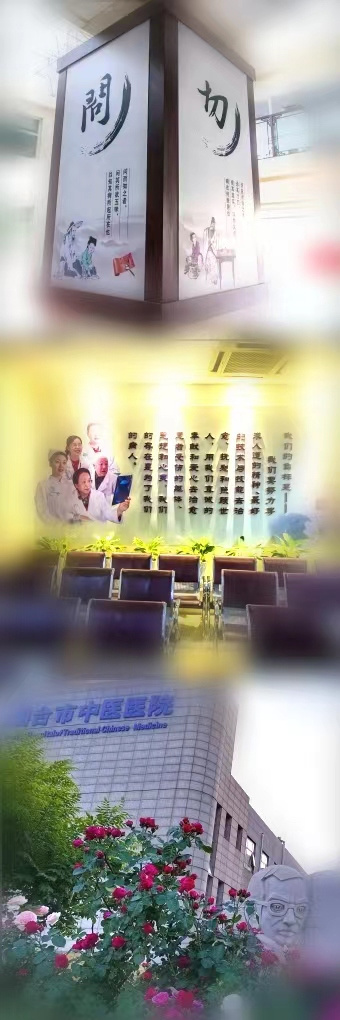
Xinglin Professional Technology - Ophthalmology | Remove Obstacles, Guard Brightness - The Ophthalmology Department of Yantai Traditional Chinese Medicine Hospital Helps Patients with Complex Cataracts Reclaim Clear Vision
"At last, I could once again see my grandson's smiling face clearly. It's been two years since I last saw it so clearly!" Uncle Wang, who had just removed the eye bandage, gently touched his grandson's cheek with his palm, and his voice was filled with uncontrollable excitement. This scene of pure warmth had been his long-cherished wish in the dim light for over seven hundred days.
Two years ago, Uncle Wang's world began to be shrouded in a thin mist. When looking at the seedlings in the cornfield, he could only see dark green shadows; when reading his grandson's award certificate, he could only recognize the red background. At first, he didn't take it seriously, thinking it was due to his old age. But as the mist grew thicker and thicker, his right eye could only clearly see the blurry outlines of the objects in front of him. Then, accompanied by his family, he came to Yantai City Traditional Chinese Medicine Hospital.
The examination results showed that Uncle Wang had type 2 diabetic cataracts in both eyes, and he also had diabetic retinopathy. Only the cataract in his left eye developed more slowly. Although he had some difficulty seeing clearly at the moment, he was still able to manage his daily life. However, the right eye's condition was more severe, with the opacity completely blocking his vision. A surgical procedure was necessary to remove the cataract. After thoroughly reviewing the medical records, Dr. Wang Dianke decided to perform the cataract surgery on the right eye first, inserting an artificial lens. Once the right eye recovered, he would then monitor the development of the left eye.
This cataract surgery was extremely challenging. Uncle Wang's right eye had previously undergone vitrectomy, during which the vitreous humor inside the eye was removed and replaced with the aqueous humor that maintains the shape of the eye. This made his right eye resemble a fragile "balloon" filled with water - the eye wall lost the support of the vitreous humor and became extremely soft. Any slight external force or fluctuation in pressure could cause the "balloon" to rupture, leading to leakage of aqueous humor, eyeball collapse, and other fatal consequences. Moreover, Uncle Wang's cataract had progressed to the mature stage and he had previously undergone vitrectomy, resulting in the posterior capsule of the right eye becoming very thin, lower than the thickness of one-third of a hair, and extremely fragile. This pathological state significantly increased the difficulty and risk of the surgical operation. Even a slight mistake during the operation could cause the posterior capsule to rupture, and the artificial lens would fall into the deep part of the eye, subsequently triggering severe complications such as uveitis and secondary glaucoma, and even leading to blindness. What's more difficult is that Uncle Wang is also a patient with hypertension and type 2 diabetes. The risks of bleeding and rupture during the operation have significantly increased.
Facing this complex case, the ophthalmology team did not follow the conventional cataract surgery procedure. Instead, based on Mr. Wang's specific eye anatomy, they designed a personalized surgical plan that aimed to "prevent leakage, preserve the posterior capsule, and stabilize intraocular pressure", namely "reverse eyebrow-shaped scleral tunnel incision + 23G vitrectomy cannula pre-positioning".
Unlike the traditional straight incision, Director Wang Dianke flexibly adopted the design of an inverted eyebrow-shaped scleral tunnel incision. During the surgery, based on the actual thickness of the sclera of Uncle Wang, the cutting angle was flexibly adjusted - ensuring that the surgical knife could enter smoothly while also maintaining sufficient tissue strength to prevent the eyeball from rupturing. This incision design built the first safety barrier for the subsequent smooth operation.

The 23G vitrectomy cannula is pre-positioned as a key factor in maintaining stable intraocular pressure. During the procedure, the doctor adjusts the perfusion flow rate to flexibly respond to the subtle changes in anterior chamber depth, ensuring that the eye remains in an ideal state of being fully filled but not overly tense, providing constant hydraulic protection for the fragile posterior capsule membrane.
When implanting the artificial lens, the doctor slowly inserted the capsule through the main incision, and then used the positioning hook to adjust the position with millimeter-level precision. At that moment, the lens settled firmly. At that point, the tense nerves of the medical staff in the operating room finally relaxed. The postoperative slit lamp examination showed that Uncle Wang's right cornea was transparent, the anterior chamber depth was normal, the position of the artificial lens was centered, the posterior capsule was intact without any defect, and his vision recovered to 0.5!
For patients like Uncle Wang with cataracts, the preoperative eye conditions were already quite complex, and they also had multiple underlying issues. After the surgery, their vision was able to recover to 0.5, which was far beyond expectations. We adopted a flexible design of the inverted eyebrow-shaped incision and pre-installed 23G vitrectomy cannula, breaking the treatment limitations for such high-risk cataract patients with diabetes or after vitrectomy surgery, and providing them with a safe and effective treatment plan. Dr. Wang Dianke, the ophthalmology director, said.
The success of the surgery not only restored Mr. Wang's damaged eyes, but also conveyed our hospital's profound concern for the quality of patients' lives. The Ophthalmology Department of Yantai Traditional Chinese Medicine Hospital will continue to delve into the cutting-edge technologies of minimally invasive ophthalmology, allowing more patients suffering from eye diseases to regain clear vision under the precise and flexible protection.

Telephone: 086-535-6597085
Emergency Telephone: 086-535-6597120
Address of the General Hospital: No.39, Happiness Road, Yantai City, Shandong Province
Bus route: take No. 2, No. 16, No. 26, No. 37, No. 42, No. 48, No. 70, No. 80, No. 82 direct

WeChat Public
©COPYRIGHT Yantai Traditional Chinese Medicine Hospital

SAF Coolest v1.2 设置面板 RGASS-AHOF-UAAFE-ZFA
无数据提示
Sorry, the current column has no content for the time being.!
You can view other columns or returnHome Page