

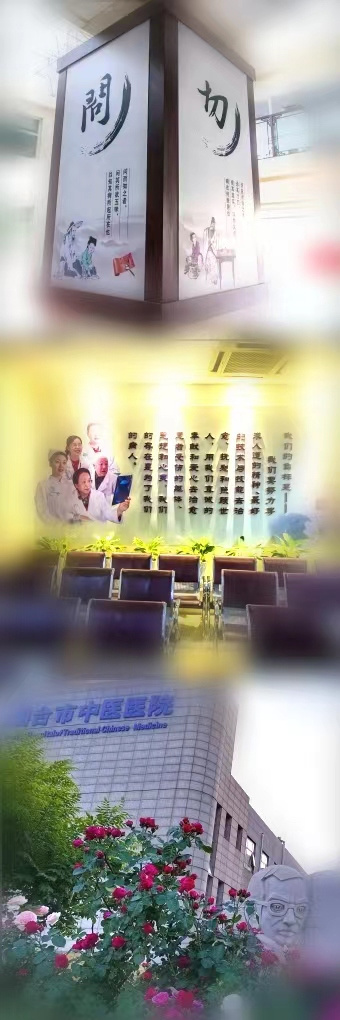
The Qilu Traditional Chinese Medicine (TCM) Advantageous Specialty Cluster Oncology Group 1 successfully its regular online consultation and difficult case discussion meeting.
The construction of the Qilu TCM Advantageous Specialty Cluster is a reform and key task determined by the Provincial Party Committee and Provincial in 2020. It aims to utilize a three-year period to drive development through leading specialties, innovate the cluster construction model, and strive to build a specialty echelon with obvious provincial advantages, county-level leading drivers, and a reasonable regional distribution. As the leading specialty, the Oncology Department of Yantai Traditional Chinese Medicine Hospital is following the work requirements of the Provincial Health Commission, committed to leading member specialties to create a specialty cluster that serves as a demonstration and leader within the province, radiates to inter-provincial regions, has national influence. It aims to establish a TCM specialty construction brand with Shandong characteristics, characterized by excellent clinical efficacy, obvious distinctive advantages, outstanding innovation capabilities, strong comprehensive strength, and radiation and driving effects, enabling the diagnosis and treatment level of advantageous TCM oncology diseases to reach domestic or international leading levels. Recently, the Qilu TCM Advantageous Specialty Cluster Oncology Group1 held its regular online consultation and difficult case discussion meeting. This meeting was organized by Vice President Hou Aihua of the leading unit, Yantai Traditional Chinese Medicine Hospital. Experts participated in the online meeting included Chief Physician Shao Hongmin, Chief Physician Tan Song, Chief Physician Dai Lingling, and Associate Chief Physician Wang Jinguo from the leading Oncology Department Over 20 people attended, including Director Han Li from the member unit Shandong Cancer Hospital, Director Guo Jishan from Shandong Qingdao Hospital of Integrated Traditional Chinese and Western Medicine and key physicians from their respective departments. First, Shandong Qingdao Hospital of Integrated Traditional Chinese and Western Medicine presented a case of a patient with Stage III colon cancer undergoing postoperative adjuvant chemotherapy The patient had multiple comorbidities including hypertension, coronary heart disease, and diabetes, and was in poor physical condition. During adjuvant chemotherapy, the patient experienced numerous adverse reactions such as palpitations, blood pressure, chills, fever, and skin rashes. The attending experts discussed how to reduce toxicity and enhance efficacy in the next steps. Experts suggested adopting a dose-reduction treatment based on the grading of chemotherapy-related adverse reactions, while fully assessing the benefits of chemotherapy and the tolerance of adverse reactions. During the treatment process, the "convenient and safe" "strengthening the body and inhibiting tumors" characteristics and advantages of TCM should also be fully utilized, adopting integrated traditional Chinese and Western medicine treatment to reduce toxicity and enhance efficacy, allowing patient to recover quickly. Shandong Cancer Hospital presented a case of gastric cancer with multiple metastases and long-term survival with the tumor. Currently, the patient's progressionfree survival period has exceeded 39 months. The attending experts fully affirmed the important role played by the multidisciplinary team (MDT) diagnosis and treatment model during the patient' treatment. From the formulation, implementation, and evaluation of the initial immune combination chemotherapy strategy to the final successful conversion to surgical treatment, the clinical goal of complete cure was achieved, new hope to the patient. Every step of this process embodied the collective wisdom and hard work of experts from related specialties such as oncology, TCM, surgery, radiotherapy, imaging, and pathology This case is also a very typical example of the successful conversion of integrated traditional Chinese and Western medicine treatment. In the subsequent treatment follow-up process, the advantages of TCM should also fully utilized, brainstorming and daring to innovate to bring the patient a more stable quality of life and longer survival time. After more than an hour of discussion, all participating experts and backbones stated that through this consultation and difficult case discussion, they not only effectively solved the difficulties and doubts in clinical work, but also learned about the cutting edge of oncology。


Telephone: 086-535-6597085
Emergency Telephone: 086-535-6597120
Address of the General Hospital: No.39, Happiness Road, Yantai City, Shandong Province
Bus route: take No. 2, No. 16, No. 26, No. 37, No. 42, No. 48, No. 70, No. 80, No. 82 direct

WeChat Public
©COPYRIGHT Yantai Traditional Chinese Medicine Hospital
SAF Coolest v1.2 设置面板 RGASS-AHOF-UAAFE-ZFA
无数据提示
Sorry, the current column has no content for the time being.!
You can view other columns or returnHome Page