

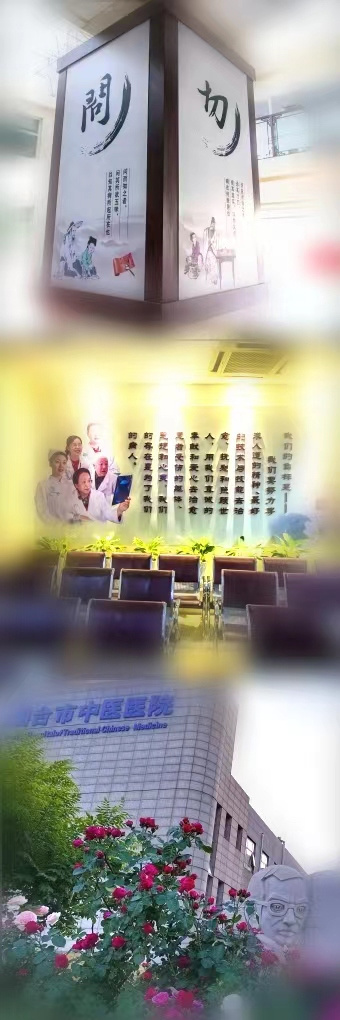
Traditional Chinese Medicine Specialization · Specialized Leadership ② | Oncology Department: With distinctive treatments, we safeguard the dignity of cancer patients' lives.
The prevention and treatment of malignant tumors is an important issue in the construction of Healthy China. The combination of traditional Chinese and Western medicine in tumor diagnosis and treatment, with its unique advantages of "reducing toxicity and enhancing efficacy, enabling tumor survival, and providing comprehensive management", has brought new hope for many patients with advanced-stage tumors. As a national key specialized hospital in traditional Chinese medicine, a national clinical key specialty, a national key specialty in traditional Chinese medicine, and a key discipline in Shandong Province, the core department of the leading unit of the Shandong Provincial Tumor Prevention and Treatment Specialized Alliance, the Tumor Department One of Yantai Traditional Chinese Medicine Hospital, has been deeply engaged in the prevention, diagnosis, treatment, and rehabilitation of combined traditional Chinese and Western medicine tumors for over thirty years. It adheres to the core concept of "benefiting, regulating, and promoting", and has established a comprehensive cycle of prevention, diagnosis, treatment, and palliative care integrated traditional Chinese and Western medicine prevention and treatment system. With effectiveness and warmth, it has highlighted the "national-level" specialty brand.

01.Deepen the national expertise, forge a powerful team for the integration of traditional Chinese and Western medicine.
The discipline gains depth through inheritance and expands far-reaching through innovation. Since its establishment in 1996, after decades of development, the Oncology Department has become a leading center for traditional Chinese medicine cancer treatment and prevention in the province and a well-known one in the country. As a core clinical unit, the department has 44 beds and has built a well-structured and highly skilled medical and nursing team. Currently, there are 3 senior professionals and 3 master's degree supervisors in the department. It gathers high-level talents such as national-level elderly traditional Chinese medicine experts, Shandong Province's renowned traditional Chinese medicine practitioners, and Qilu Health and Wellness Outstanding Young Talents. More than 90% of the physicians have a master's degree or above, possessing both profound traditional Chinese medicine knowledge and modern cancer diagnosis and treatment capabilities.
At present, the department has achieved a dual-driven approach by introducing modern diagnostic equipment and traditional Chinese medicine-specific treatment tools. This enables "precise treatment with modern technology and strengthening the body with traditional Chinese medicine". Meanwhile, the department adheres to the combination of syndrome differentiation and disease differentiation, the use of both acupuncture and medication, and the treatment of both inside and outside the body. It has formed a comprehensive treatment model centered on lung cancer, covering gastric cancer, liver cancer, colorectal cancer, breast cancer, gynecological tumors, etc., covering multiple tumor types. It customizes systematic and individualized treatment plans for patients with difficult and advanced tumors.
Director Mu Yuejun of the Oncology Department said, "We have always prioritized the quality of patients' lives. We do not merely focus on shrinking the tumors; we also aim to enable patients to live longer, better, and with less pain. The full integration of traditional Chinese medicine and the complementary advantages of traditional and modern medicine are the core path for us to solve the problems in the treatment of advanced tumors and improve the long-term survival rate."
02.Focus on technological innovation and demonstrate the advantages of diagnosis and treatment through "practical application"
In response to clinical challenges such as chemotherapy side effects, poor tolerance in advanced stages, high risk of recurrence after surgery, and difficulty in controlling cancer symptoms, the Oncology Department has been deeply engaged in technological innovation, developing five core technologies: painless radiotherapy and chemotherapy, pure traditional Chinese medicine tonification therapy, traditional Chinese medicine-specific techniques, postoperative comprehensive management, and six-element acupuncture method. These technologies have been verified by numerous clinical cases, demonstrating the significant advantages of integrating traditional and modern medicine.
The painless radiotherapy and chemotherapy technology has solved the problem of chemotherapy tolerance. The department takes "Fuzheng Huimao Decoction" as the core, combines acupuncture patch application, abdominal moxibustion, patch moxibustion, and traditional Chinese medicine formula regulation, and builds a full-scenario attenuation system for radiotherapy and chemotherapy, targeted therapy, and immunotherapy. This effectively alleviates symptoms such as gastrointestinal reactions and bone marrow suppression, and improves the treatment completion rate. There was a 70-year-old patient with advanced small cell lung cancer who experienced severe discomfort after chemotherapy at another hospital. After being transferred to this department and undergoing traditional Chinese medicine treatment, he successfully completed multiple cycles of treatment, with the tumor significantly shrinking and his survival period far exceeding the average level.

Pure traditional Chinese medicine multi-target treatment brings hope to patients with advanced and intolerable conditions. For elderly patients who cannot receive Western medical treatment, the department adopts a combined treatment plan including intravenous administration of Chinese patent medicines, hospital-prepared preparations, oral decoctions, and traditional Chinese external treatments, achieving tumor survival and long-term stability. A 71-year-old patient with advanced lung cancer who was extremely weak after chemotherapy recovered completely in terms of weight and physical strength after more than three years of comprehensive traditional Chinese medicine treatment. The tumor lesions remained stable.
Traditional Chinese medicine's unique techniques can non-invasively address cancer pain and pleural/abdominal effusion. Wenyi Huaxu San can alleviate mild to moderate cancer pain and reduce the side effects of painkillers; Nitong San applied externally can rapidly improve malignant pleural/abdominal effusion and limb edema, with reliable efficacy and low cost. The related techniques have been widely applied in many hospitals.
Postoperative comprehensive management builds a solid defense line against recurrence. The department implements phased intervention for high-risk patients after lung cancer surgery. After surgery, it promotes spleen health and lung strengthening; during chemotherapy, it reduces toxicity and enhances efficacy; and during the recovery period, it consolidates and maintains the condition. This has helped many high-risk patients achieve clinical cure.
The six qi acupuncture method effectively controls stubborn symptoms. Our department was the first to introduce the Longsa Kaihui Six Qi Acupuncture Technique, based on the theory of the Five Elements and Six Angles. It quickly alleviates symptoms such as stubborn cough and insomnia related to tumors, with no side effects and being completely painless, earning high praise from patients.
Director Mu stated frankly: "Traditional Chinese medicine is not an auxiliary treatment method; rather, it is the core approach that runs throughout the entire process. The combination of traditional and Western medicine enables early-stage patients to recover faster and have a lower recurrence rate, and allows advanced-stage patients to experience less pain and enjoy a longer life. This truly embodies the people-oriented treatment philosophy."

03.Strengthen the original aspiration of a doctor and shoulder the responsibility of the country to safeguard the health of the people.
The Oncology Department has always adhered to the principle of "putting people first, prioritizing life". It has helped thousands of patients with advanced-stage tumors to extend their survival periods and improve their quality of life. It has also enabled many patients who were unable to receive treatment at other hospitals to regain their vitality and helped them return to their families and society, highlighting the unique value of integrated traditional Chinese and Western medicine in cancer prevention and treatment.
When it comes to the development of the department, Director Mu Yuejun emphasized: "The department has always been closely aligned with the overall layout of the hospital's high-quality development, adhering to the development direction of integrating traditional Chinese and Western medicine, prioritizing clinical research and humanistic medical care. We insist on strengthening distinctive technologies, optimizing the entire management process, and improving the treatment of difficult cases. We work in harmony with the overall development of the hospital, striving to build a regional-leading and domestically-advanced integrated traditional Chinese and Western medicine cancer diagnosis and treatment center, injecting strong impetus into the hospital's high-quality development."
Standing at a new starting point for the high-quality development of traditional Chinese medicine, the Oncology Department of Yantai Traditional Chinese Medicine Hospital will continue to uphold the national specialized mission, deepen the collaborative innovation of traditional Chinese and Western medicine, optimize the characteristic technical system, and enhance the diagnosis and treatment capabilities for difficult and critical cases. With superb medical skills, high-quality services, and warm care, it will build a strong health defense line for regional cancer patients, inject strong momentum into the high-quality development of traditional Chinese medicine in cancer prevention and treatment, and write a more profound chapter in inheriting and promoting traditional Chinese medicine culture and safeguarding people's life health.

Telephone: 086-535-6597085
Emergency Telephone: 086-535-6597120
Address of the General Hospital: No.39, Happiness Road, Yantai City, Shandong Province
Bus route: take No. 2, No. 16, No. 26, No. 37, No. 42, No. 48, No. 70, No. 80, No. 82 direct

WeChat Public
©COPYRIGHT Yantai Traditional Chinese Medicine Hospital
SAF Coolest v1.2 设置面板 RGASS-AHOF-UAAFE-ZFA
无数据提示
Sorry, the current column has no content for the time being.!
You can view other columns or returnHome Page