

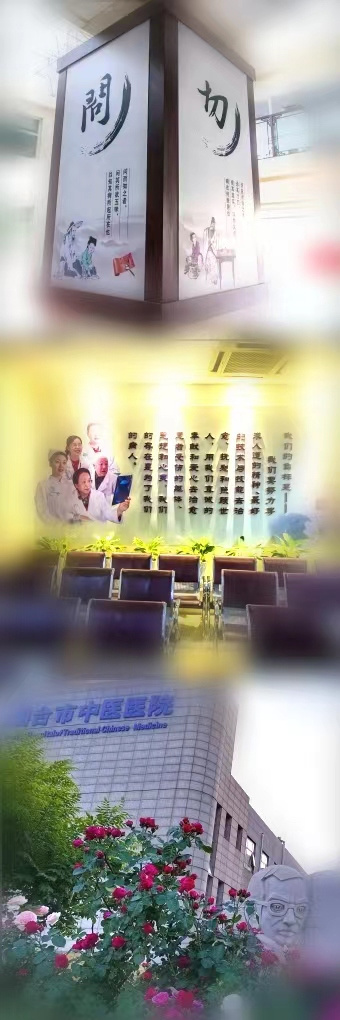
Department of General Surgery of Yantai Traditional Chinese Medicine Hospital: With minimally invasive techniques, we strive to achieve excellence; with a compassionate heart, we safeguard health.
The tide rises, the port city warms up; diligently studying the theories of traditional Chinese medicine, integrating Chinese and Western medical practices. In recent years, the General Surgery Department of Yantai Traditional Chinese Medicine Hospital has always adhered to the development direction of "minimally invasive leading, collaboration between Chinese and Western medicine, quality-oriented, innovation-driven". It has been striving to reach new heights in surgical diagnosis and treatment, and deeply embedding humanistic warmth in nursing services. All the medical staff of the department have worked together with one heart and carried out practical actions. With superb professional skills and a high sense of responsibility, they have transformed the medical practitioners' original intentions and dedication into a solid barrier for safeguarding the health of the citizens.
From 2022's 537 surgeries to 2025's 1,130 surgeries, and from 322 to 924 tertiary and quaternary surgeries, this entire period witnesses the resolute strides of the hospital's general surgery department in the field of minimally invasive surgery. "Since starting minimally invasive surgeries in 2019, we have continuously broken through technical barriers. Currently, the proportion of minimally invasive surgeries for gastrointestinal tumors has exceeded 85%, and surgical methods such as total laparoscopic radical resection of stomach and colorectal tumors have become clinical standards. The bleeding volume for most surgeries can be controlled at around 10 milliliters, achieving a transformation in patients' surgeries from traditional 'large wounds, slow recovery' to 'high efficacy, fast recovery'." Director Sun Chenkun of the General Surgery Department explained.
The skills of a doctor are demonstrated in times of crisis and refined through meticulous practice. Recently, Mr. Yu, 58 years old, was diagnosed with liver metastasis from gastric cancer and came to our hospital for treatment. The General Surgery Department immediately initiated the MDT (Multidisciplinary Team) collaborative model to tailor a treatment plan for him. After four cycles of neoadjuvant therapy, the tumor successfully shrank. Sun Chenkun led the team to successfully perform laparoscopic liver tumor resection + total laparoscopic gastrectomy, and showcased this surgery through live streaming to fellow doctors across the country, becoming a vivid illustration of the department's expertise in minimally invasive techniques. Mr. Li, 65 years old, was in critical condition due to gastrointestinal bleeding. When he visited the hospital, his hemoglobin level was only 2.6 grams. The department team worked tirelessly and precisely, completing the total laparoscopic gastrectomy after emergency blood transfusion. The intraoperative bleeding was only about 10 milliliters, building a solid defense for life. Patients with low rectal cancer who were trapped in the dilemma of preserving the anus were successfully treated with the team's superb skills, achieving anus preservation without the need for preventive stoma, allowing the patients to escape the pain of stoma and return to a normal life.
Each successful treatment is a vivid demonstration of the department's use of skills to save lives. It is also the best proof that they, with their professionalism and responsibility, have illuminated the path of life for patients.
Success depends on talent, and achievements are made through talent. Talent is the core driving force for the development of a discipline. The hospital has always adhered to the combination of "importing talents, exporting talents, and cultivating local talents", meticulously cultivating a team of highly skilled, well-structured, and proactive physicians, laying a solid foundation of talent for the high-quality development of the department. Currently, there are 8 physicians in the General Surgery Department, including 4 with senior professional titles. They regularly conduct business learning on Tuesdays, making clinical difficulties and diagnostic dilemmas the topics that the team collectively explores. They also collaborate with key personnel from the Oncology Department, Medical Imaging Department, and Pathology Department to conduct interdisciplinary training, breaking down professional barriers and achieving knowledge sharing and mutual promotion of capabilities.
Building nests to attract phoenixes and gathering wisdom to empower. The department has specially invited experts from Peking University Cancer Hospital's Gastrointestinal Surgery Department to regularly visit the hospital for consultations and surgical guidance; they have also hired Huang Qingxian from the Liver, Bile Duct and Pancreas Surgery Department of Shanxi Cancer Hospital as a visiting professor, establishing the Huang Qingxian Professor Workstation. Under the leadership of Professor Huang Qingxian, multiple high-difficulty surgery live broadcasts have been completed. At the same time, Professor Huang Qingxian has also shared his advanced diagnosis and treatment concepts as well as surgical skills, helping the department achieve new breakthroughs in related surgical fields.
Furthermore, with the strong support of the hospital, the department has introduced equipment such as STORZ 3D high-definition laparoscope, 4K fluorescence laparoscope, and imported Olympus ultrasonic knife, providing solid hardware support for the implementation of high-difficulty surgeries. The MDT (Multidisciplinary Team) collaborative model has been regularly implemented, enabling the formulation of the most optimal treatment plans for cancer patients, achieving an upgrade from "single-discipline diagnosis and treatment" to "precise comprehensive diagnosis and treatment", allowing every patient to enjoy personalized and scientific medical services.
"Nowadays, an increasing number of local people in Yantai, who originally planned to seek medical treatment in Beijing or Shanghai, have learned that our hospital actively introduces experts from renowned hospitals and continuously improves its own medical treatment standards. They will be more inclined to stay in their hometown and enjoy high-quality medical services right at their doorstep," said Sun Chenkun. "This is not only a high-level recognition of the department's medical treatment level, but also the best test of the team's talent development achievements."
"Precision 'intestinal' care, 'gut' moving forward", this is not only the management philosophy of the nursing team in the general surgery department of the hospital, but also their action guide integrated into daily care. Against the backdrop of the continuous increase in the number and difficulty of surgeries in the department, the nursing team centers on patients, deeply explores the characteristics of integrated traditional Chinese and Western medicine nursing, integrates the appropriate techniques of traditional Chinese medicine with specialized Western medical nursing, allowing professional nursing to resonate in sync with medical development, and using meticulous care to safeguard the rehabilitation path of every patient.
Chu Wenjia, the head nurse of the general surgery department, introduced that the current nursing team consists of 12 members, including 6 senior nurses. The team has dynamically optimized the classification of nursing standards, implementing individualized, full-process monitoring and multi-dimensional assessment for critically ill, major surgery, and elderly patients in a closed-loop management approach. They have also fully promoted the ERAS (Enhanced Recovery After Surgery) concept to make the nursing services more precise, efficient, and heartwarming.
For the common problems such as postoperative pain, restlessness, abdominal distension and constipation, insomnia and anxiety among patients, the nursing team of the General Surgery Department of Yantai Traditional Chinese Medicine Hospital has developed a mature set of traditional Chinese medicine-based nursing plan: ear acupressure bean application, acupoint dressing, Chinese medicine hot compress bag, following meridians for acupoint selection and promoting meridians, in a gentle and non-toxic way, to quickly relieve the pain and restlessness of patients; moxibustion at Zhongwan and Zusanli acupoints, combined with abdominal massage and acupoint massage, to strengthen the spleen and stomach, regulate qi and relieve constipation, allowing the postoperative gastrointestinal function to recover quickly.
Recently, a 74-year-old patient with strangulated intestinal obstruction experienced persistent abdominal distension and loss of appetite after surgery. Despite conventional treatments, there was little improvement. The nursing team in the department promptly implemented traditional Chinese medicine (TCM) nursing intervention. The next day, the patient's abdominal distension significantly eased and he was able to eat normally. "In addition to the routine application of TCM techniques such as auricular therapy and moxibustion through barriers, the acupuncture department doctors are also stationed in the department to provide professional acupuncture and physical therapy for postoperative patients," Chu Wenjia said. The nursing team has also developed excellent specialized Western medicine nursing skills, proficient in complex wound care, management of various catheters, and enteral nutrition support, and are skilled in performing cardiopulmonary resuscitation, handling major bleeding, and other emergency rescue measures. The application of advanced equipment such as phototherapy machines has further accelerated the healing of surgical incisions.
A doctor not only diagnoses diseases but also heals the soul and prescribes medicine, offering care and affection. In the general surgery department, nursing services go beyond merely cold technical operations; they also provide heartfelt humanistic care that touches people's hearts. The team has always adhered to the dual-track approach of "technical care and psychological counseling", integrating humanistic warmth into every detail of diagnosis, treatment, and nursing, extending it to the entire cycle of patients' rehabilitation outside the hospital, allowing patients to feel warmth during their illness and gain strength during their recovery.
Due to the physical changes of patients with colostomy, they are prone to fall into the emotional predicament of self-abasement and anxiety. The nursing team of the department will customize specific nursing plans for them: Before the operation, specialized nurses precisely locate the colostomy and explain relevant knowledge in detail, helping patients relieve their psychological burdens; After the operation, they guide patients and their families in skills such as changing the colostomy baseplate and skin care, enabling them to master self-care methods proficiently; They establish one-on-one psychological support to relieve patients' negative emotions, and at the same time, set up an exchange group for colostomy patients to encourage new patients to accept themselves and regain confidence in life.
The department has all kinds of ostomy supplies on hand, providing services such as home dressing changes and phone guidance for patients with mobility issues. For patients who have undergone major surgeries and are experiencing insomnia and anxiety after the operation, psychological counseling is conducted regularly to explain rehabilitation knowledge and help patients overcome their unknown fears. Qiu Wenjia recalled that there was once a patient in their 80s who refused to eat and resisted activities due to concerns about the prognosis. The responsible nurse accompanied them in conversations every day and guided them step by step in rehabilitation exercises, gradually breaking down the patient's mental barriers. Eventually, the patient cooperated with the treatment and was discharged smoothly.
To achieve full-cycle coverage of nursing services, the general surgery nursing team of the hospital has developed a continuous care model of "discharge guidance + telephone follow-up + WeChat group Q&A + on-site service", making the phrase "nurses will always care after discharge" no longer just a mere empty promise. It is precisely this meticulous care and unwavering dedication that have kept the patient satisfaction rate of the department consistently above 90%, earning unanimous recognition and trust from patients and their families.
Skill builds the soul, kindness heals the world; medical care is shared, warmth accompanies each other. The entire medical team of the General Surgery Department uses minimally invasive techniques as their sharp blade to break through the shackles of illness; with the integration of Chinese and Western medicine as their shield, they safeguard the health of patients; with humanistic care as their light, they illuminate the path to recovery. As the department head Sun Chenkun frankly stated: "The path of a doctor is based on skills and guided by kindness; every step of the department's development is a synchronous resonance between medical treatment and nursing, and is the collective effort of the entire team."
From the rapid development of the general surgery department, it is clearly observable that the hospital's strategic plan of "emphasizing traditional Chinese medicine, strengthening Western medicine, and integrating traditional and Western medicine" has taken root and flourished. It is also evident from this that the vivid practice of "relying on the people's trust and having an outstanding reputation" has been realized.
As a tertiary-class first-level general hospital integrating medical care, teaching, research, prevention, and rehabilitation, Yantai Hospital of Traditional Chinese Medicine is taking the general surgery department as an example to drive the coordinated development of all disciplines within the hospital. National and provincial key specialties are competing to make progress, each clinical department is deeply engaged in detailed work, and continuous breakthroughs are being made in aspects such as talent cultivation, technological innovation, service optimization, and equipment upgrading. It is steadily advancing towards the goal of "comprehensive discipline categories, balanced development, emphasizing both Chinese and Western medicine, with prominent characteristics of integrating Chinese and Western medicine, being advanced domestically and first-class in the province, and being a modern comprehensive hospital of traditional Chinese medicine." With a heart of kindness and skills of excellence, it safeguards the life and health of the people of Yantai, and writes a new chapter of the integration of Chinese and Western medicine in the era.

Telephone: 086-535-6597085
Emergency Telephone: 086-535-6597120
Address of the General Hospital: No.39, Happiness Road, Yantai City, Shandong Province
Bus route: take No. 2, No. 16, No. 26, No. 37, No. 42, No. 48, No. 70, No. 80, No. 82 direct

WeChat Public
©COPYRIGHT Yantai Traditional Chinese Medicine Hospital

SAF Coolest v1.2 设置面板 RGASS-AHOF-UAAFE-ZFA
无数据提示
Sorry, the current column has no content for the time being.!
You can view other columns or returnHome Page